
Math Centers that Grow Super Smart Kids
Ditch Those Pretty Math Task Cards

Pretty Math Centers Task Cards
Elementary teachers love cute centers. We love to see color coded little boxes, labeled for easy independent use. Our students can show initiative and engagement all on their own. This looks especially good when administration comes for a visit, be it an observation or a “learning walk”. It looks great. After all, one of the main criteria of a well-run classroom is the ease of transitions and what students can do on their own.
This is all great and dandy until the assessment scores come in. And while the show looks great, the paper doesn’t lie. What worked in centers of kindergarten and first grade doesn’t work for 3rd, 4th, and 5th grade. Post assessment, you will hear teachers say, “They know how to do all of it; I don’t know why students don’t show it on the assessment.”
Oh, I hear this every year. It never fails. The same jam, the same results. The same confusion. It’s wild. It’s called madness. Doing the same thing over and over and expecting different results.
Here is the problem. If students spend every day during their math small groups playing with those pretty task cards, doing the same simple problem over and over, they will start believing that they have mastered the grade level content and expectations. However, when they have to actually apply their learning to the grade-level content, they will find out that the pretty task cards didn’t prepare them for anything at all.
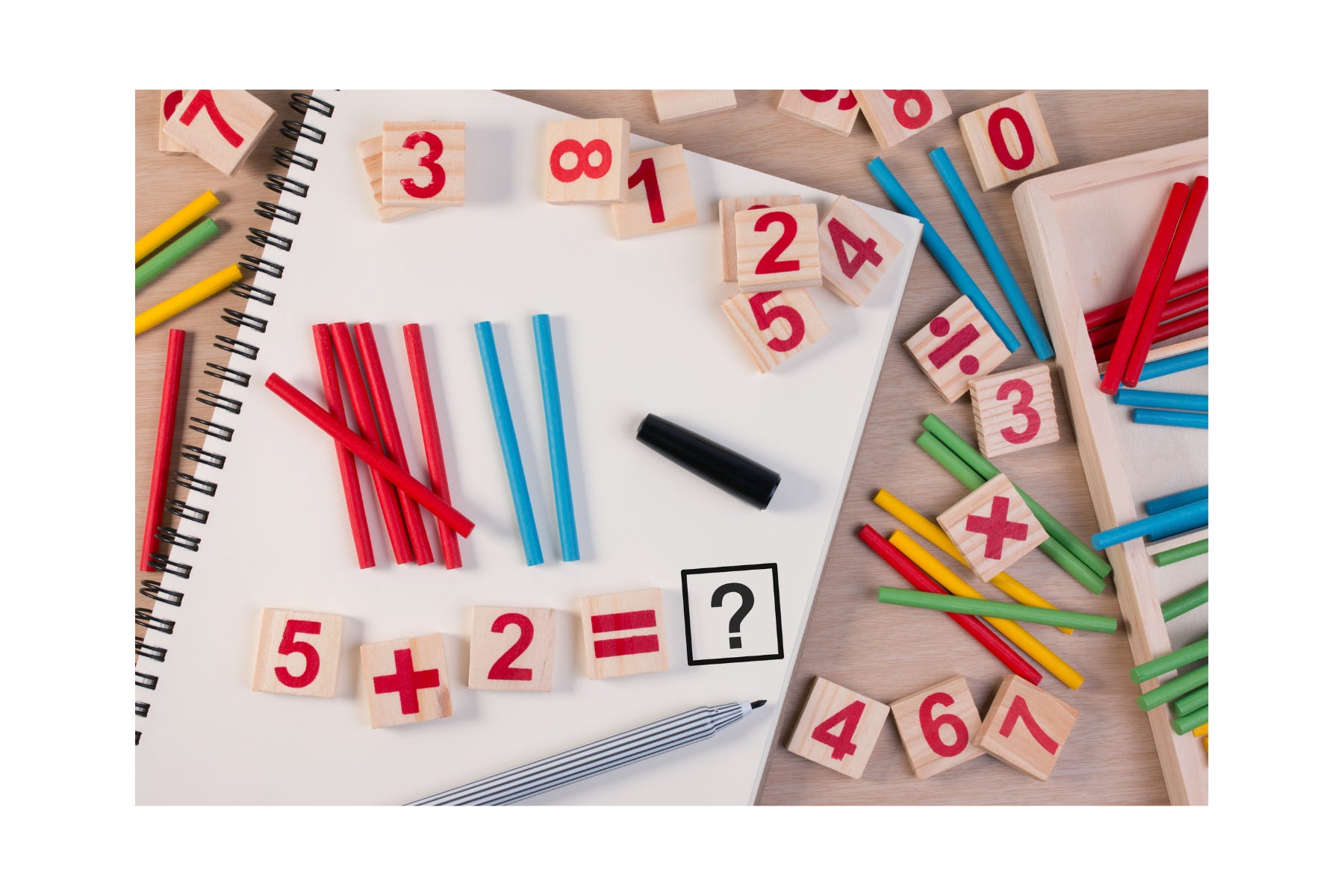
The Truth About Task Cards (Super IMPORTANT!)
Those task cards we love? They keep students busy, which feels productive. Students sit down, pull a card, solve problem after problem, and check their answers against a key. Compliance! Order! But here’s the thing that I know for sure: busy doesn’t mean thinking deeply.
When students spend their math center time on isolated procedural practice—”Solve for x,” “Find the sum,” “Multiply these fractions”—they become really efficient at following a specific procedure. But watch what happens when you change the problem slightly or ask them to apply that same skill to something unfamiliar. They freeze. They have no conceptual bedrock to stand on.
And this matters so much. Students who learn only procedures develop what researchers call “fragile” knowledge. It should be called shallow knowledge. It feels solid when they’re practicing, but it crumbles when the context changes or they forget a step. That’s not the kind of math learners we want our students to become.
Why Deep Understanding Actually Matters (More Than They Think)
Conceptual understanding and procedural fluency aren’t separate things we teach one after the other. They’re intertwined—they grow together. But here’s the powerful part: when students truly understand why a procedure works, they remember it better, apply it more flexibly, and can actually reconstruct it if they forget a step.
Think about it. A student who understands fractions conceptually—who can visualize what 1/3 actually is—doesn’t just memorize fraction procedures. That student can adapt, problem-solve, and tackle fractions in new contexts. That student becomes a mathematical thinker, not just a procedural solver.
The research is clear: conceptual understanding is the foundation that supports everything else. And the best place to build that foundation? In those small group moments at math centers. Math centers have to be run by a teacher. They are precious minutes we get to practice and reteach with our students. Don’t relegate this time to meaningless rote activities.
What Deep Learning Questions Actually Do
Okay, so what does it look like when we replace task cards with deep learning questions? Students have to explain their thinking. When you ask, “Why does this method work?” or “How is your approach different from your partner’s?” students can’t just follow steps mindlessly. They have to articulate why they did what they did. That articulation itself deepens understanding. You literally cannot claim to understand something you can’t explain clearly. Encourage students to talk directly to their classmates, agree or disagree with their solutions, propose a different solution, ask “why?”, and “explain”.
Students discover multiple strategies simultaneously. Instead of doing 20 identical problems with one procedure, imagine this: students solve a problem however they want, then compare with a partner. One child used concrete manipulatives, another drew a picture, and another went straight to symbols. All three are mathematically valid, all three are thinking deeply—but at their own level. Research shows this kind of strategic flexibility directly correlates with deeper conceptual understanding.
All students have access to the same mathematics. Remember the “leveled task cards”? Level 1, Level 2, Level 3? Those inadvertently send messages about who is and isn’t a “math person.” Deep learning questions with what researchers call “low floors and high ceilings” are totally different. Every student can enter the task productively, but the ceiling extends infinitely. A struggling learner manipulates concrete objects. An advanced learner discovers a generalized principle. Same mathematics, different depths.
Here’s How This Actually Works in Your Centers
No more than 1 or 2 complex problems. Students model solutions in two different ways, then share their solutions with their peers. They explain their thinking, field classmates’ questions, and apply multiple solutions. You facilitate and try to have students run the discussion as much as possible.
Instead of: Students working in isolated skill groups . Try: Mixed-ability partnerships where students analyze why different strategies lead to the same answer. The peer explanation is a powerful learning experience for both students.
Instead of: Compliance and task completion , try: Mathematical agency. We don’t worry about the right answer. We want to analyze our strategies. Students making decisions about strategy and approach. This shift supports both achievement and math confidence—students start seeing themselves as mathematical thinkers.
The Bottom Line (Teacher to Teacher)
Those deep learning questions might feel and look less organized than laminated task cards. You might worry you’re not “covering enough.” (Hint: You will always feel like that). But here’s what I know: students who develop real conceptual understanding alongside procedural skill outperform students who develop isolated procedural skill. It’s not even close, and at some point, it is extremely difficult to catch up.
Your small group time is sacred. Don’t spend it on compliance and rote. Spend it on thinking. Spend it on the kinds of conversations that actually change how students see themselves as mathematicians, thinkers, and problem solvers.
Have Fun Teaching Math!
Mrs. Lena, M.Ed.
Find me on TpT; Mrs Lena’s Store
Read more: Kids Read Blog